

Trackside roles are volunteer-based, but it isn’t unpaid in every sense — most events cover meals, and many regions run incentive programs that pay a stipend or gift card per day worked.
EYES, EARS, AND VOICE OF THE TRACK
Flaggers stand where no ticket can get you — on the corner, feet from the action, with a job that matters every lap. No experience needed. We’ll teach you everything.
Drivers can only see what’s in front of them. Race Control can only react to what it can observe, whether through cameras or reports from around the circuit. In corners beyond the reach of cameras, flaggers are the first and often most important source of information. Every corner station is a team, and every team member has a job.
WHAT YOU’LL DO ON A CORNER
Watch. You are the driver’s eyes for the things they can’t see – the spin in the next corner, the oil on the racing line, the car limping back to the pits.
Signal. Yellow, blue, white, black – every flag you throw tells 30 drivers at 120 mph exactly what to do next. It’s the most direct conversation in racing.
Communicate. On the radio, you are Race Control’s link to the corner. Clear, calm calls are how a race stays safe – and how incidents get handled in seconds.
WHY FLAGGERS KEEP COMING BACK
Ask anyone who has stood on a corner for a season why they keep signing up. The answers are always the same four.
The view. You’re closer to the racing than any spectator, photographer or crew member will ever get.
The people. Corner stations run on coffee, inside jokes and decades of friendships. You come for the racing and stay for the people.
The skills. Situational awareness, radio discipline, staying cool when things go sideways – flagging teaches all of it, and it transfers everywhere.
The doors it opens. The same license that puts you on a corner at a Regional race is the first step toward IMSA, IndyCar and Formula 1 weekends.
YOUR FIRST DAY, PACKED
You don’t need a license, a radio or any experience to work your first event. Show up, and the station captain will pair you with a mentor. You will need to dress for a full day outside.
WHAT TO BRING
- White or light-colored top and pants – “whites” are the flagger’s uniform so drivers can spot you
- Closed-toe shoes you can stand and move in all day
- Hat, sunglasses and sunscreen
- Rain gear – the race runs rain or shine, and so do you
- Water and snacks (many Regions feed their workers, but pack as if they don’t)
- Light gloves for handling flags
- A folding chair for the quiet moments
Ready to Go? Easy as 1-2-3.
Ninety minutes on the couch, one Saturday at the track, and you’re in.
Get Licensed
Online · Free · About 90 minutes
The SCCA Academy Flagging & Communications course is short video chapters with a quick quiz after each. Pass the final and you hold a Certified Regional F&C license good at any SCCA event in the country – from your home track to the National Championship Runoffs®.
Find an Event
Pick a race weekend, contact the Region’s Flag Chief or just show up at registration and say you’re here to flag. Chiefs have never turned away a willing volunteer.
From Your Corner to the World’s Biggest Stages
IndyCar, IMSA, NASCAR and Formula 1 all rely on SCCA-trained flagging and communications officials. Most of the men and women in white at the Rolex 24 At Daytona are SCCA members. More than 100 SCCA volunteers staffed the 2026 Freedom 250 Grand Prix on the streets of Washington, D.C. Every one of them started the same way you will – on a corner at a Regional race.
Once you hold your Regional license, the IMSA F&C Differences course is one more short online module. Complete it and you’re eligible to volunteer at IMSA weekends like the Rolex 24 and Motul Petit Le Mans. From there, the only limit is how many weekends you want to spend at the track.
They Started on a Corner, Too
Four SCCA flaggers who took the same first step you’re about to take.
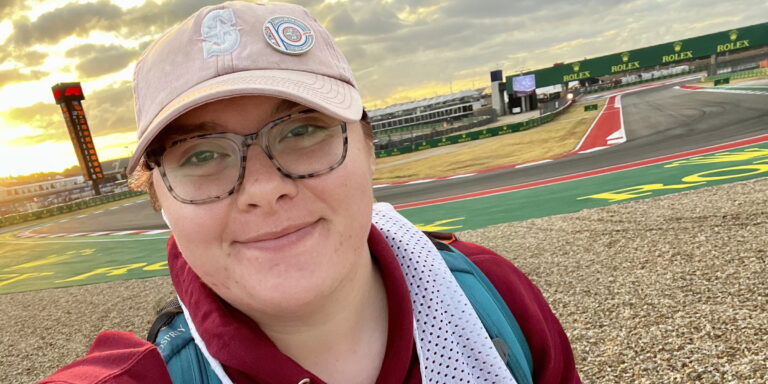
Cierra da Corte
Licensed at 15. Working Formula 1 at 19. Now a regular at Miami and Las Vegas. “It truly is the best seat in the house.”
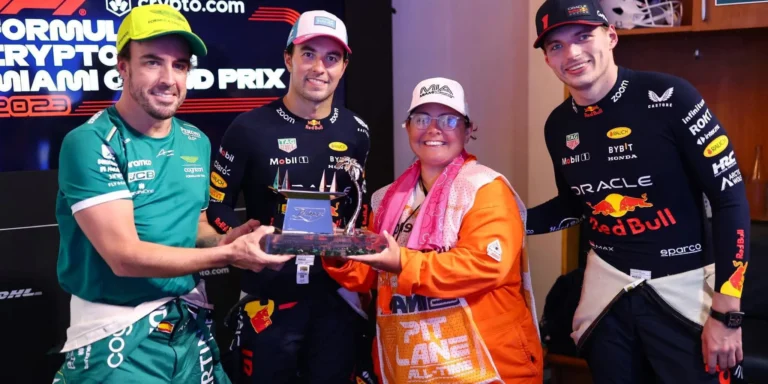
Tarin Finn
Eighteen years on SCCA corners, Marshal of the Week at the Miami Grand Prix, and 2025 F&C Volunteer of the Year. “SCCA is absolutely the first step.”
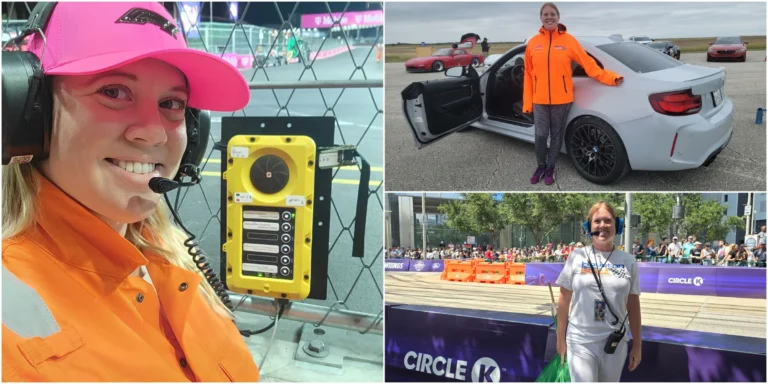
Amy Grothusen
Started in autocross. Earned her F&C license locally. Eleven Formula 1 events later, she’s the Turn 1 communications marshal in Las Vegas.
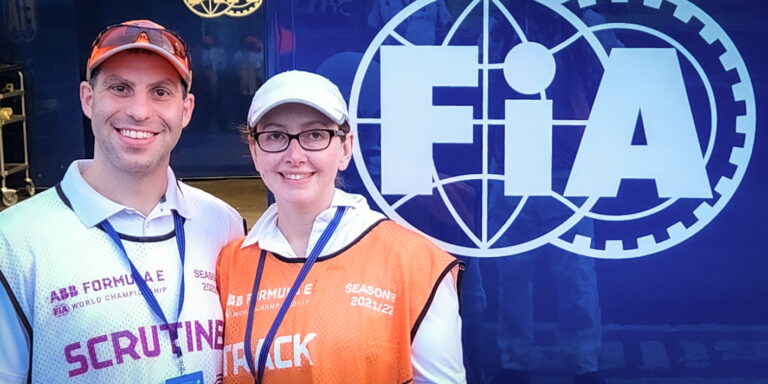
Kelly & Paul Messier
Her first event was flagging at New Hampshire Motor Speedway in 2018. Now the two of them work Formula 1 in Las Vegas together.
Two Sides of the Wall, One Opinion
Ask the people who wave the flags. Then ask the people who race under them.
Why do they do Trackside?
FAQs
Do I get paid?
What's the difference between the roles?
Corner marshals (also called flagging and communications or F&C) are stationed around the track watching for incidents and relaying information to the drivers by waving flags and to Race Control by radio. Grid workers line cars up and get them staged for their session. Stewards act as referees, keeping the event on schedule and ruling on incidents. Tech inspectors check cars and driver gear for safety before and after sessions. Registrars check competitors in and issue credentials. Timing and scoring officials track every lap and produce the results. There are several more specialties beyond these — paddock marshal, sound control, race chair — so there’s a fit for almost anyone.
Do I have to be an SCCA member?
Yes. Trackside roles require SCCA membership in good standing, in part because your insurance coverage on course is tied to that membership. However, there are weekend membership opportunities for you to utilize while you’re figuring out if Trackside is for you.
Do I need experience to start?
Not necessarily. Every specialty starts with basic, region-level training, and most regions pair new workers with an experienced mentor for their first few events. You’ll earn a regional license first, then can work toward divisional and national credentials as you rack up event days. Some specialties, like stewarding, require experience in other places before you qualify to start their region-level training.
What is Trackside?
Trackside is SCCA’s umbrella term for the volunteer roles that keep a road racing event running from outside the driver’s seat — flagging and communications, technical inspection, grid, timing and scoring, registration, and event stewarding. If you’ve ever wondered who’s waving those flags, checking your roll cage, or posting your lap times, that’s Trackside.
Your Corner Is Waiting
Ninety minutes on the couch, one Saturday at the track, and you’re in. See you on the corner.
CONTACT US
We’re here to help! Whether you want to get involved or you have a question about Trackside opportunities, you’ve come to the right place. Please feel free to contact us using this form and you’ll get an email from us soon.