The SCCA® Targa program was built around a dream of teams running on as many racetracks as possible, multiple days in a row – that’s what it was all about. Next, toss in something fun to do between the tracks (like a scavenger hunt or poker run), and maybe add the periodic autocross, and bam! You have the making of an automotive adventure no one will forget! Well, SCCA did exactly that, and the program has taken off just like you’d expect.
The 2026 season jumped into action with Targa Tex-ish (which was kind of in Texas), then shifted eastward to Targa Carolinas (which was definitely in the Carolinas), event coverage of which can be found here and here.
Yet that wasn’t the end of the fun.
Summer hosted two more SCCA Targas in two different parts of the country – both equal in excitement, and both a heaping handful of fun. Targa New England, running July 15-18, began on Wednesday at Palmer Motorsports Park, where teams hit the track for their first timed sessions. Thursday was a visit to historic Lime Rock Park and then a Friday morning of TrackSprint at Canaan. That led to the grand finale on Saturday at Pocono Raceway and a slew of exhausted Targa maniacs joining in the Tire Rack SCCA Time Attack Challenge fun taking place at the Tricky Triangle that weekend.
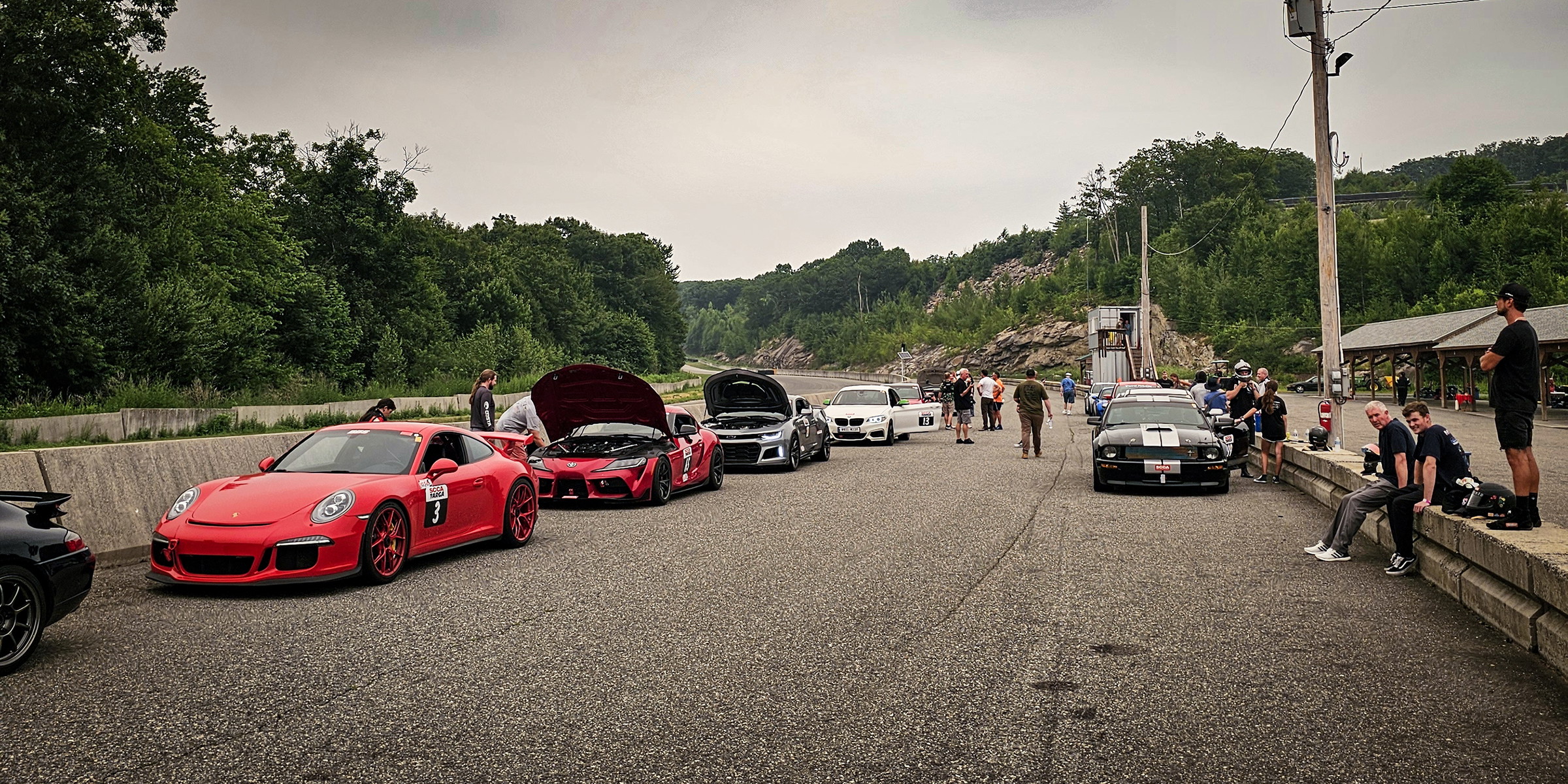
(SCCA Targa New England kicked off the summer Targa fun with a romp around some of the best racetracks in the northeast. Photo by Carrie Lee.)
Targa Great Lakes, occurring barely a week later on July 29-Aug. 1, was yet another late-summer party. We could tell you how great it was, or we could let Lee Grimes, the former-KONI-employee-slash-retired-SCCA-staffer-slash-all-around- good-guy-who-has-spent-a-lifetime-behind-the-wheel, tell us about his experience.
“One of my most anticipated highlights of this summer was running the Sports Car Club of America™ Targa Great Lakes event,” Grimes posted on the SCCA Targa Facebook group following the event. “We drove on four different racetracks and the Tire Rack HQ test track and transited between tracks on a very tight schedule that kept us always hopping. It was an amazing adventure and I recommend it for anyone who loves an action-packed road trip.”
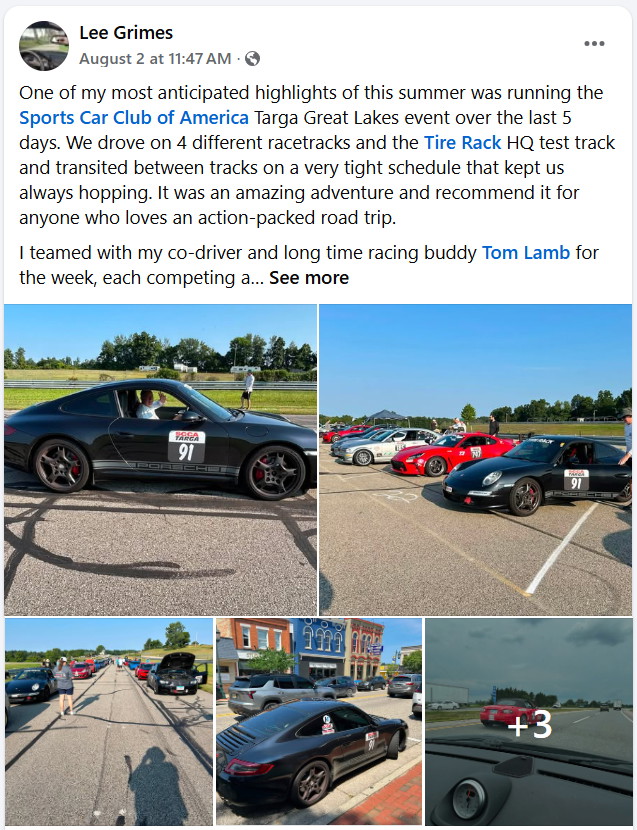
Teamed with his long-time racing buddy Tom Lamb, the duo got the chance to compete in one car and contribute to a team score. That began with a drive from Lee’s home near Cincinnati to Blackhawk Farms for registration and the opening session followed by a 300 (ish) mile drive to Grattan Raceway near Grand Rapids (with some mixing it up and opting for the ferry). Morning laps at Grattan were followed by a drive to Tire Rack HQ for some skid pad action and autocross, along with a warehouse tour, near South Bend (another 140 miles).
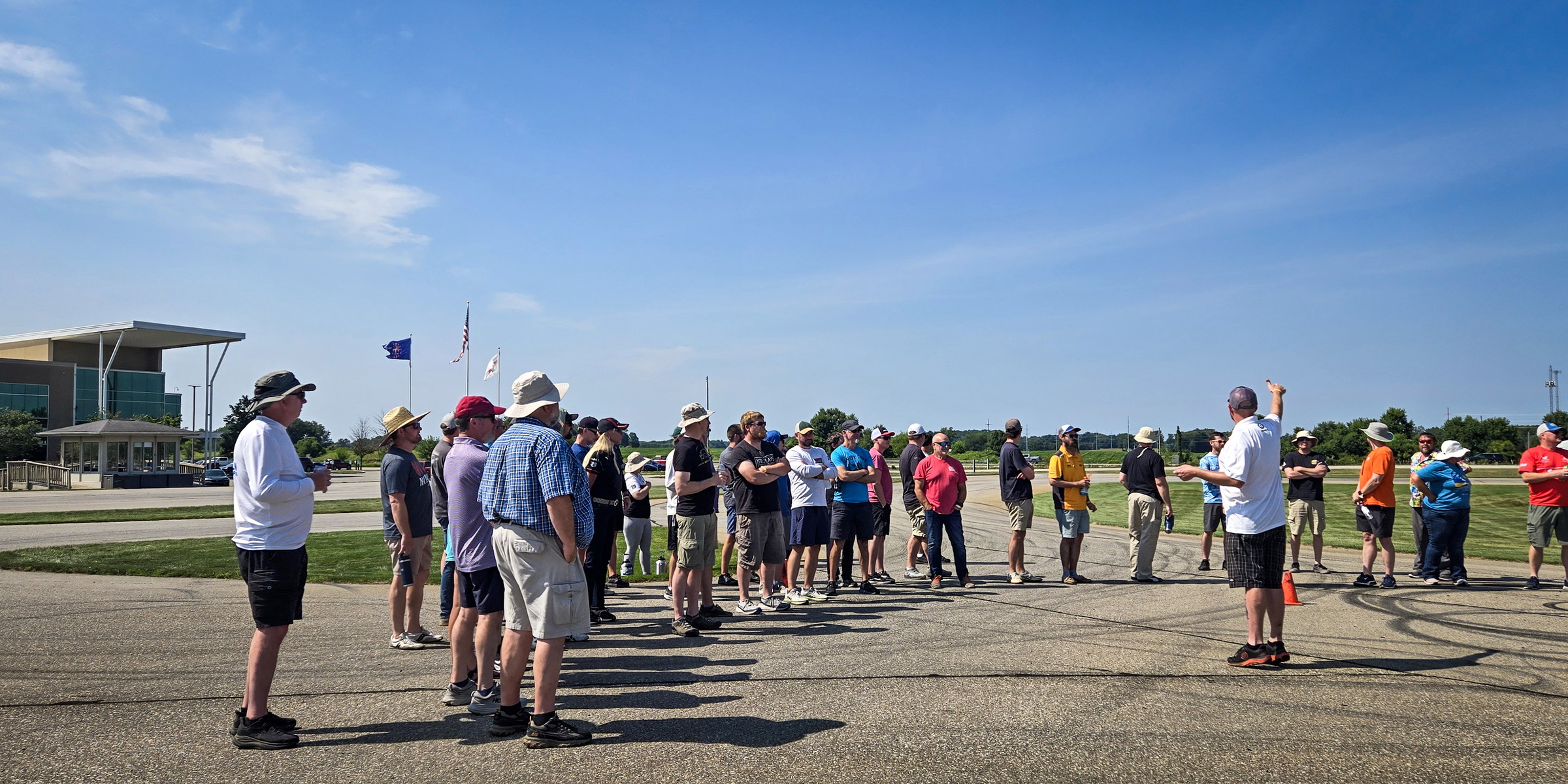
(A stop at Tire Rack’s HQ involved a facility tour and a chance to rip around the company’s test track. Photo by Andie Albin.)
From there, it was back north about 60 miles to GingerMan Raceway, where Friday’s laps took place. Not finished, the group caravaned back to Tire Rack for an autocross on Friday, then headed to Autobahn Country Club for Saturday morning’s sessions and awards (which took place alongside that weekend’s Tire Rack SCCA Time Attack Challenge).
If you’re keeping score, door to door, that was about 1,750 miles for Grimes and a lot of hard (and fun) driving.
“The vibe is like summer camp for gearheads, with friendly competition but more emphasis on camaraderie and teams helping each other succeed and have a good time,” Grimes said.
All of this is to say that an SCCA Targa event requires a nice, very expensive car, right? Not exactly.
“There were all kinds of street-legal cars allowed and no trailered racecars, and we literally had everything from a recent Porsche 911 GT3 to an early 280k mile Toyota Prius, plus about 30 more teams in between,” Grimes continued. “A real mix of cars from Chevy Corvettes to a Chevy Sonic, a modern performance Cadillac to a 50-plus-year-old Fiat X1/9 that ran and sounded great, and more.”
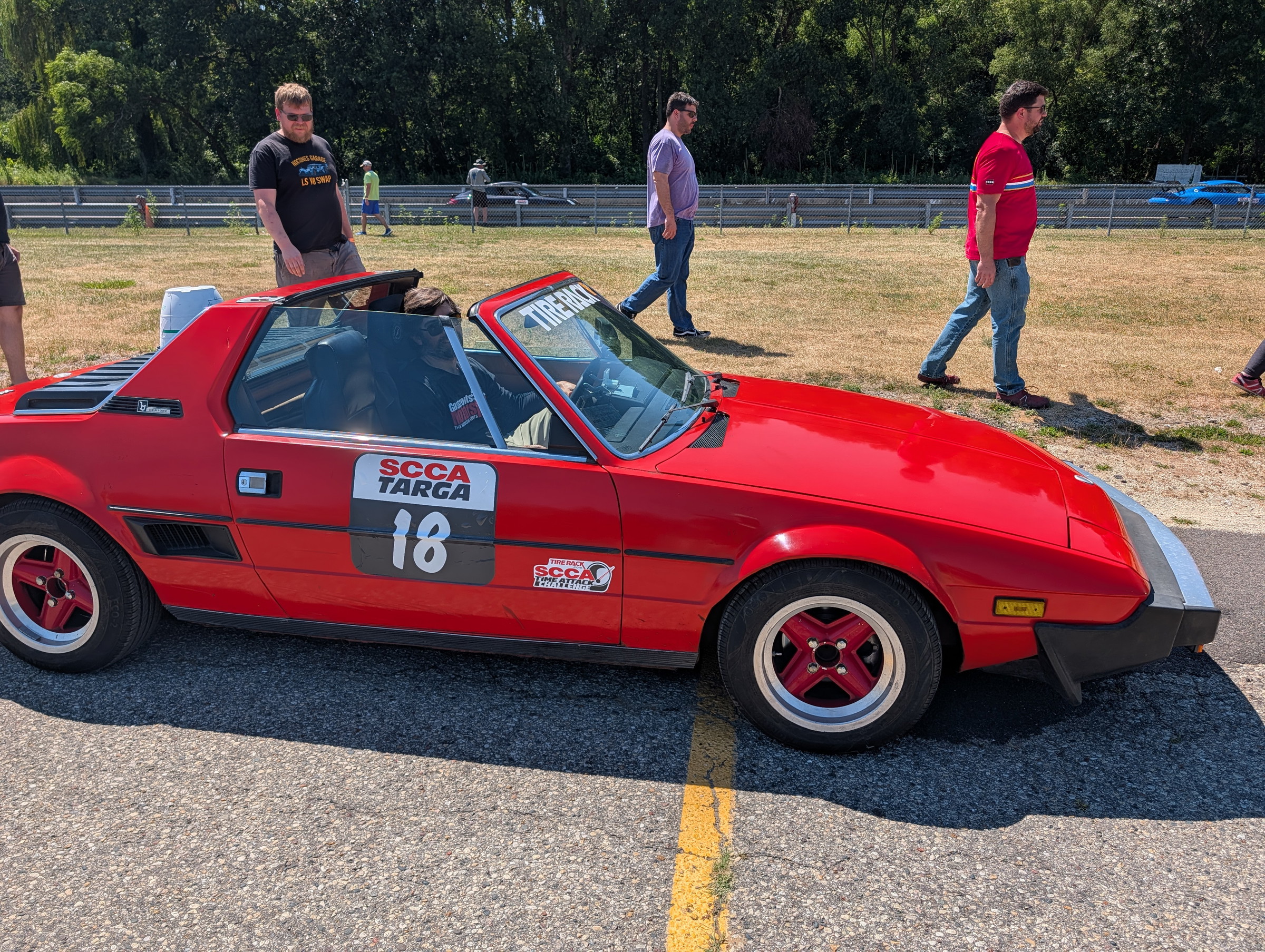
(This Fiat X1/9 was an eyecatcher. Photo by Alison Hill.)
Diversity in cars is welcome, and the same is true for the age of participants. Case in point, SCCA’s Targa New England witnessed a 70-year age gap between two drivers, with the youngest being 16.
“Every team had to carry all their gear and tools in their cars and use only one set of streetable and trackable tires for the full event,” Grimes added. “Most teams had two drivers, but a few hardcore folks did it solo on both tracks and transits.”
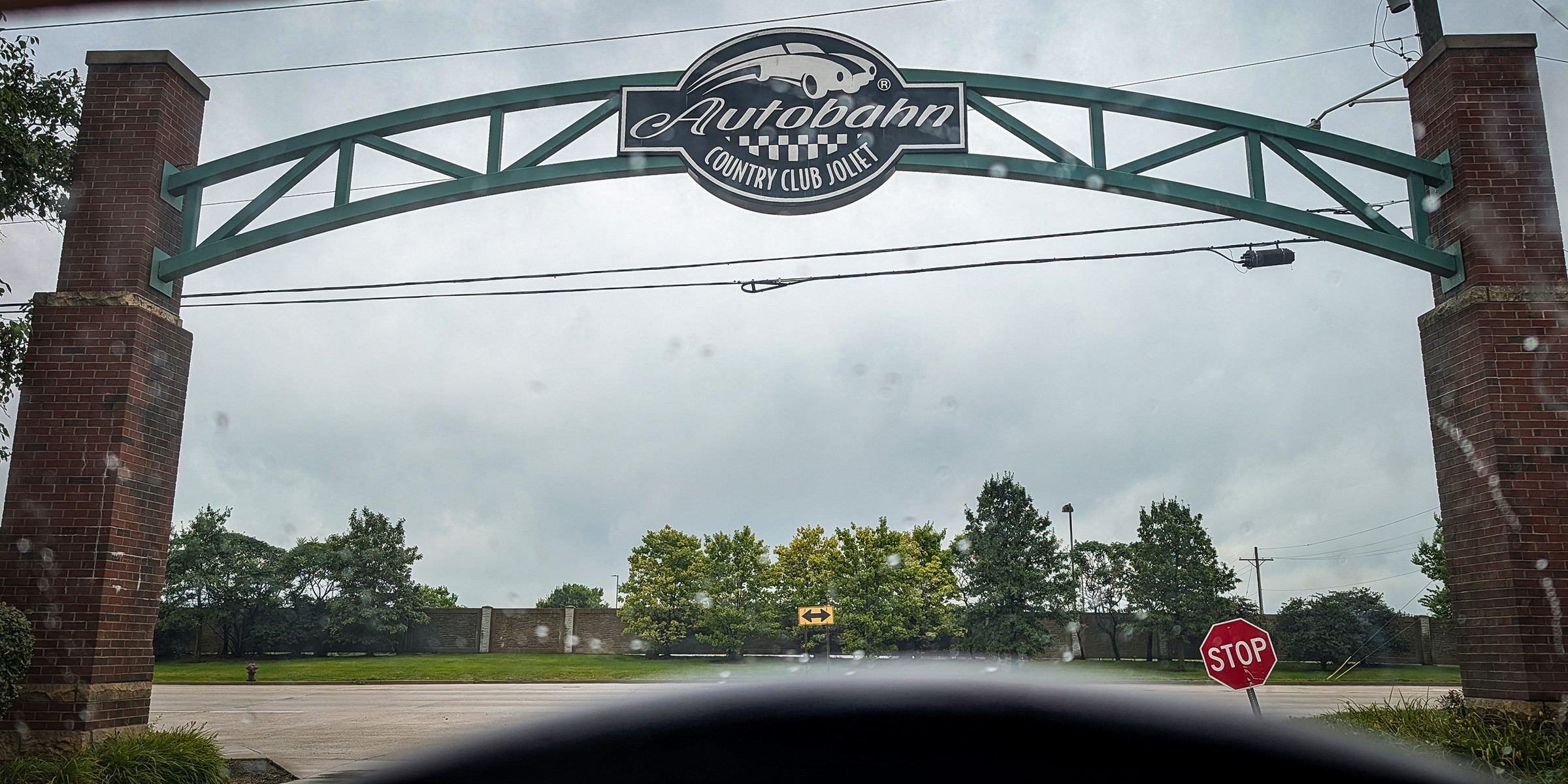
(The last stop for SCCA Targa Great Lakes was at Autobahn Country Club. Nice! Photo by Alison Hill.)
Exhausted yet appreciative, Grimes wanted to be sure to thank the folks at Tire Rack for their support – including feeding 50 road-weary souls – and the SCCA team that put on these events.
Yes, he’ll be back next year, and you should join the fun, too!
Keep up to speed on the latest SCCA Targa news by following the SCCA Targa Facebook group and signing up for SCCA’s weekly SportsCar® News newsletter.
Lead photo by Alison Hill
John Bodnar, SCCA’s 2025 Worker of the Year Presented by Mazda for Timing & Scoring, was focused on building a 1986 Honda Civic Si for HillClimbs when, in December 2009, he was seriously injured in a major car wreck on the street. “A lady pulled out in front of me, messed me up pretty good,” the North Carolina Region member relates.
Still rehabbing as spring became summer in 2010, anxious to compete but with the HillClimb car sitting incomplete, impatience as much as anything led him to enter a local autocross with another all-original ’86 Civic.
And he had a blast.
“I really enjoyed it, had fun,” he says. “But when I started, I still had my leg injury from the wreck, so I couldn’t shag cones – I couldn’t do that. So I asked the volunteer coordinators, ‘Where can I be?’ And they’re like, ‘Are you any good with computers?’”
Bodnar, a software developer and database administrator, said, “‘Yeah, I’m pretty good with computers, familiar with them.’ ‘Good! You’re in timing,’ they told me.”
One Thing Leads to Another
Fifteen years later, he’s now vastly experienced in timing at both autocross and at the racetrack, and has lost none of his enthusiasm, whether for driving or working.
The knee injury legacy of that ’09 accident forced him to give up his conventional mountain bike in favor of an e-bike. But otherwise, he says, there are no issues with being on his feet all day, and he quickly picked up additional volunteer skills beyond timing.
“In like 2012, 2013, friends and I used to drive up to VIRginia International Raceway and work corners, flagging,” he says. “For years, I didn’t know the timing crew for road racing.”
Bodnar wound up connecting with that North Carolina Region (NCR) SCCA® Road Racing crew, though, when the Region first started hosting Time Trials.
The T&S regulars were well set up for the “normal” Time Attacks and Time Trials stuff, “but they wanted to add a TrackSprint portion, which required more of an autocross timing setup,” he explains. “So, the first several Time Trials we did, I would take our timing hardware up from autocross to set up and time the TrackSprints.
“Pretty soon, I got pulled upstairs to check out the Time Attack portion of the event, and they groomed me very quickly into taking on that role.”
Schedule Juggling
Today, he’s the Timing Chief for all three programs in the big Mid-Atlantic States region, which means some serious time juggling around his own autocross schedule. From 2010-’11, Bodnar ran his ’86 Civic Si in Street and Street Touring®; in 2012, he kicked his effort up a notch.
“I bought back my very first Honda, an ’84 1500S that I had sold in 2002, and, within 30 days of getting the car back, my daughter Ashlee and I swapped all the parts from the ’86 Si I was wanting to use for HillClimbs into it in time for the first event of 2012.
“The funny thing is, remember I said I was building a car for HillClimb? Well, I’ve never done a HillClimb…”
With a 2.0L B20Z engine and the Civic rebadged from 1500S to 2000S, Bodnar ran it for three seasons. He parked it in 2015, ordering a new Ford Focus RS and co-driving other people’s cars (“Miata, Evo, Focus, Fiesta, WRX are the ones I remember”) until the new car was finally delivered June 2016.
This year, he has a new project: To celebrate the late July return of North Carolina Region’s primary autocross venue, Cherry Point (which had been unavailable for several years). At the time this article was written (which was prior to the event), John was planning on dusting off the Civic, parked since 2014.
“Tires for the Honda are a lot cheaper than the Ford,” he explains, “and my daughter Ashlee is going in on [a fresh set] with me on this one because she’s going to race with me as well – and she likes the Honda better.”
Ashlee, a graduate of the NASCAR Technical Institute, “was in the garage with me before she could drive. She would go to the races with me, and while I was setting up the timing gear, she was prepping the car, switching the tires to the race tires at the event ‘cause back then I didn’t have a trailer.
“Once she got her learner’s permit, she started co-driving. Then she graduated, went off to school.”
Reunited, they are a fun father/daughter team.
Staying Busy
Bodnar almost always works timing even when he’s competing.
“I do work the timing. I’ll do all the setup, and I make sure I’m in timing for the first session to see that things are going smoothly. But I have enough people now who I trust. We know who’s in what classes, so we make sure those classes aren’t in the same run groups. And we’ve always made that work.
“As the chief, I have to set up the event in the computer beforehand and do the results afterwards, make sure all the points get updated and sent to the Region web masters.”
Fluent in all manner of T&S speak, Bodnar’s reputation as a “solutions guy” played a big part in his receiving the SCCA Worker of the Year recommendation. Among the many highlights: A Google Docs-plus-10-key solution to a tricky situation at a recent VIR National Championship Runoffs®, enabling the T&S crew in the South Tower to receive live timing data from the North Tower timing loop.
Like many others in the Club these days, Bodnar thinks constantly about ways to attract and keep new people.
“Yeah, that’s something I’m curious about. To my mind, the first thing is just to invite them – try to get ’em there. That’s something I picked up from [NCR’s ‘super volunteer’] Megan Tyler. She has worked almost everywhere at a Club race – F&C, T&S, Grid, Registration, just to name what I’m sure of – and she uses that experience to help guide new people to roles they might be especially interested in.
“Once they’re there, listen to ’em,” Bodnar goes on. “I find that a lot of the younger people, especially those my daughter’s age, really like you to take what they say seriously even though they may not have as much experience as you. Hear them out; don’t be dismissive.
“Outside of that, it’s hard to say. In T&S, it feels easier to get volunteers these days than other groups – I think because they’re so used to technology and computers.
Bodnar was not at last year’s SCCA Runoffs when the Workers of the Year were announced: “I wish I had gone to that event, but the out-of-state races or the ones that are far away are more of a challenge for me to get to. I’ve worked only the Runoffs at VIR, but I plan to work the ones when they get back to Road Atlanta.”
He’s uncomfortable with the recognition: “I don’t feel I’ve been doing it as long as a lot of other people who’ve gotten that award. I don’t know…I guess maybe I just jumped in very deep very quickly.”
Thoughtful, efficient, competitive, and enthusiastic – John Bodnar has set the bar high.
But will he ever get to compete in a HillClimb? Stay tuned.
Photo of John Bodnar with his daughter Ashlee courtesy John Bodnar