At the racetrack, I like to keep things simple. The KISS method (Keep It Simple, Stupid) is perfect for me. I’m not the smartest guy, so I appreciate it when things are as linear as possible. That’s why when I make a change to the setup of a race car, I change ONE thing at a time.
A lot of us know the Johnny Cash song, One Piece at a Time, released in 1976, where the protagonist works on a Cadillac assembly line in Detroit and he steals car parts in his lunch box over the course of several years until he can build an entire “free” Caddy in his driveway. If you haven’t heard the song, congratulations, you’re younger than me. I would use a more recent Post Malone tune as a reference for this “one thing at a time” concept, but saying “G wagon, G wagon, G wagon” over and over again doesn’t really get to the point.
And the point is: When dialing in your motorsports vehicle, change only one thing at a time.
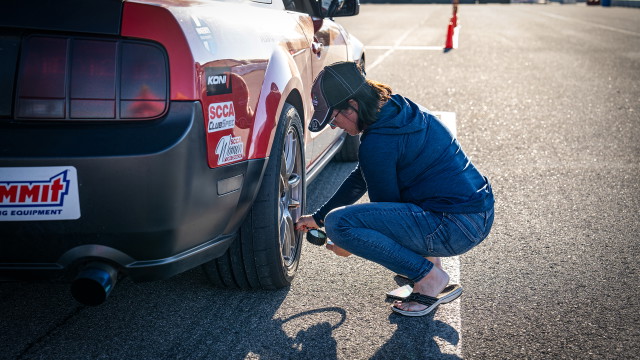
(Making setup adjustments is easy, but making them one at a time is key. Photo by Guess Work Photography)
I was at an SCCA Time Trials event a few weeks ago and a competitor came up to me and asked my advice for helping his car handle better. Folks ask me my opinion often, this isn’t uncommon. Obviously, since I know who Johnny Cash is, I’m old, which means I’ve spent a lot of years at the track. People just assume I know what I’m talking about because I’ve been around a while (what nobody realizes is that I’m still learning myself).
The driver complained that his car was loose (oversteer). I knew he had an adjustable front swaybar, so I suggested he move the end-links in and make the front bar stiffer. I specifically said, “Change the front bar, go out and see if the car is better. If that doesn’t work then we can discuss making another change.”
The driver thanked me and got to work on his car.
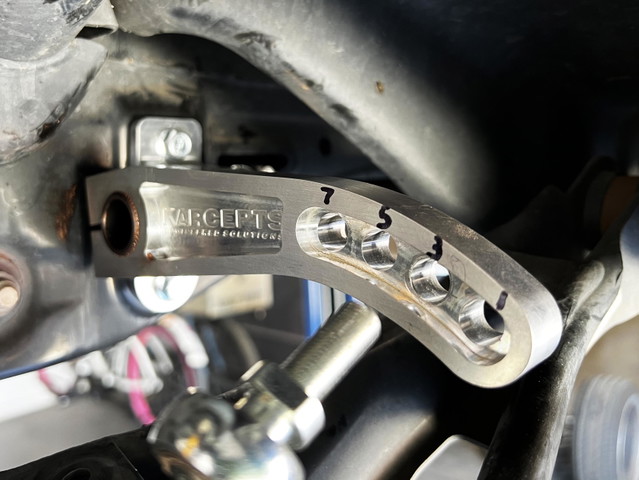
(Swaybar adjustments can dial a car in, but if you do change swaybar settings, don't change anything else until you know whether the first change worked. Photo by Rob Krider)
I was walking around the paddock at the end of the day, and I came across that same driver. I asked him how things went, and he replied, “I changed the front swaybar, made a change to the shock settings, and changed the tire pressures and then went back out on track.”
Uh oh. He changed a lot.
Did the front swaybar change help, but then more rebound in the rear shocks and more air pressure in the rear tires counter that gain? The reality is nobody will ever know, because he didn’t change one thing at a time.
The reason it’s important to change one thing at a time is because if you follow this method, you’ll start to build a flow chart for what works and what doesn’t. That flow chart is impossible to create if you don’t know what specific change fixed a problem. By doing one thing at a time, from trial and error, you’ll learn things like a stiff front bar helps with oversteer on some rear-wheel drive cars. Later, you make other changes to learn other things, like lots of air pressure in the rear tires will balloon the tires, limiting your contact patch with the track surface and increase oversteer. These two changes are contradictory and, if made at the same time, the car will be worse than before and you won’t know why.
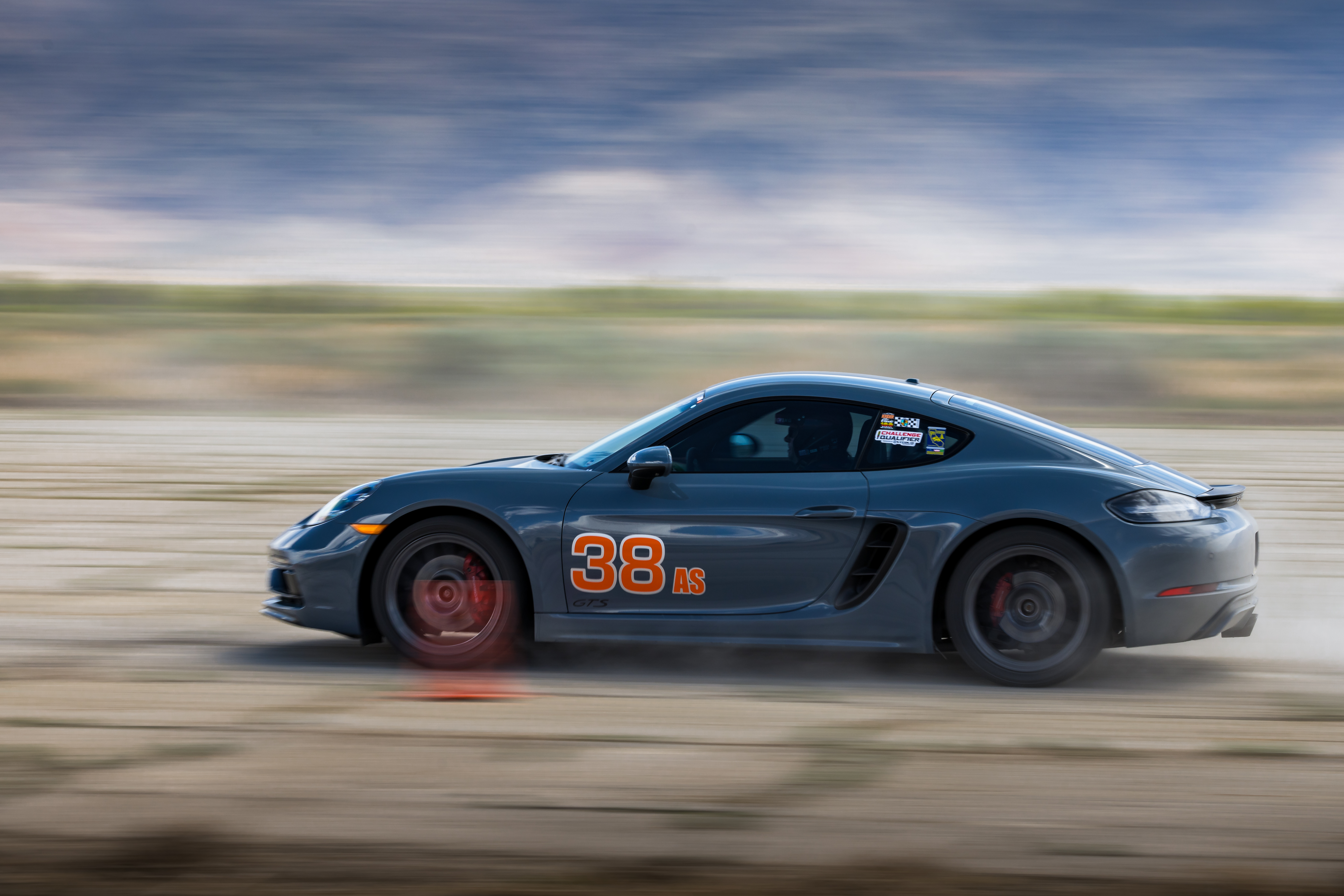
(Finding speed at at event comes one step at a time. By Crimson Photography.)
Cars have many systems and they can often be complicated beasts to figure out. The best way to tackle problems is to be pragmatic about it, and do one thing at a time. Making tons of changes on a car at once is like making three separate sports bets on a parlay and hoping they all hit. If two of your bets win and the third one doesn’t, you get zero dollars. Instead, bet on one thing at a time (disclaimer: I am in no way someone who you should take gambling advice from).
In a nutshell, make a change, test that change, and see where you’re at. If the car still needs more, then move onto the next change. Eventually, you’ll get to the solution, and you’ll know what works for next time.
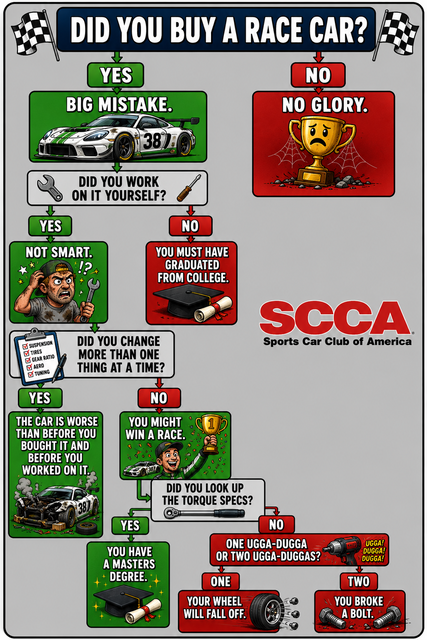
(Maybe this ChatGPT-created flowchart will help get my message across.)
Making one change at a time isn’t just for the car – it can be for the driver too.
When autocrossers need just a few tenths of a second, I tell them: “Don’t reinvent the entire course. Just work on one corner that you know you can improve on. Do everything else the same and then just fix one corner and you’ll get the time you want.”
If you know anything about racers, it’s that they rarely listen. The driver will head out on course and try seven different things: different launch, different gear choice, different braking point, different line, different eye placement … and it rarely works. Just like an adjustment on a car, one thing at a time; an adjustment to driving during competition should also be one thing at a time.
This concept of “one thing at a time” is universal and works with every category of motorsports SCCA has to offer.
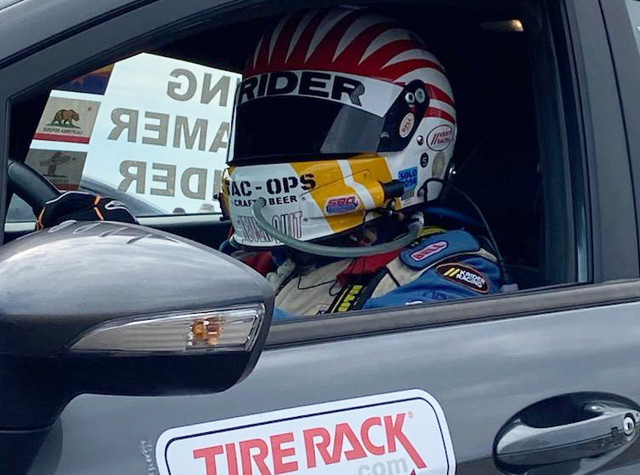
(Whether it's a change to my car or a change to my brain, I do things one at a time. By Stephen Young.)
My column on scca.com is usually about “five things,” like 5 Ways to Beat Brake Heat at a Time Trials Event, 5 Things You Need to Know About ProSolo, and 5 Things To Improve Your Qualifying Position, but this month, I’m taking my own advice, which is about doing one thing (and one thing only): Change one thing at a time.
Stick with that and you will go faster.
(About the author: Rob Krider is a national champion racer, the author of the novel Cadet Blues, and is the host of the Stories and Cocktails podcast.)
Main photo by Bae Productions / Blake Ellis