(This article was written by Brad Smith, a member of the Solo® Events Board (SEB).)
A couple of questions heard on the autocross grid include: "Is dB(C) even a real sound measurement? OSHA uses dB(A), so why don't we?" Also: "My car used to be compliant. Why is it suddenly too loud?"
I joined the Solo Events Board (SEB) in 2024, the same year the Club’s revamped sound policy went into effect for autocross events. Since then, I’ve read the member letters and talked to drivers on grid at various Solo events, and I understand their frustration. Sound enforcement at events often feels like a moving target, but the current policy aims to address two critical goals: improving everyone’s event experience and protecting the future of our sport.
I want to take a moment to directly address some of the questions the SEB has received over the last couple of years regarding sound, but before we get to that, it’s important to have a foundational understanding of the sound measurement process.
Process and Procedure: The Foundation
Admittedly, standardization isn't the most exciting topic. However, establishing how we collect data, calibrate meters, and uphold rules is the bedrock of fairness.
Measuring sound at an event isn't as simple as "setting up a meter and walking away." We must account for shifting atmospheric conditions and different operators to ensure a reading at 9 a.m. in the fog is consistent with one at 2 p.m. in the baking sun. This has been the larger of the two major issues as we continue to refine the process and implement change.
The Great Weighting Debate: dB(A) vs dB(C)
This is where the technical jargon becomes important.
To understand why the Club switched from dB(A) to dB(C), we have to look at how these function. Think of these as "filters" for a spectrum of sound. A V-8 rumble and a rotary scream produce very different frequencies.
dB(A) (A-Weighting)
This mimics the human ear at lower volumes (around 65 dB, like typical speech). It "ignores" a lot of low-frequency bass because our ears aren't very sensitive to it at low levels.
dB(C) (C-Weighting)
This is a "flatter" filter. As sound gets louder, the human ear actually becomes less sensitive to midrange frequencies, so low and high frequencies become more important and pronounced. At the high decibel levels produced by a race car, dB(C) provides a much more accurate representation of the actual acoustic energy being produced.
Fletcher-Munson Curves (FMC)
FMC illustrates how our perception of sound "flattens out" as the volume increases. At the decibel levels produced in competition, dB(C) provides a much more accurate representation of the actual acoustic energy being produced.
Site Retention: Why Neighbors Care
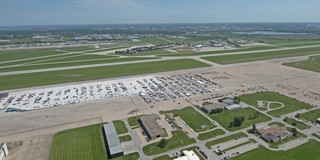
We’ve all seen it happen: a great site (an old airstrip, stadium lot, or fairground) suddenly disappears from the event schedule due to "noise pollution."
A car can be 100% legal on a dB(A) meter and still lose us a site. Because dB(A) ignores those low, "thumpy" frequencies, it fails to measure the exact sound that travels half a mile and rattles a neighbor’s windows. By switching to dB(C), we are finally measuring the sound that actually causes the complaints.
Protecting Our Greatest Asset: The Workers
Beyond the neighbors, there is the immediate concern of the people standing 50 feet from your exhaust all day. Low-frequency noise carries a massive amount of physical energy. Even with earplugs, that energy can cause physical fatigue and long-term hearing damage by vibrating the small bones in the ear. dB(C) gives us a more honest look at the total energy hitting our course workers.
The transition to dB(C) isn't about moving the goalposts to be difficult, it’s about using a more accurate tool for a high-volume environment to ensure our sport is sustainable and our sites are secure.
SCCA Sound Policy: Frequently Asked Questions
With those basics now in mind, let’s directly tackle some of the most frequently asked questions that come to the SEB regarding sound. Some of what follows might be redundant after you’ve just read what’s above, but it’s important that everyone truly understands sound.
Why did we move away from dB(A) if that’s what most sites use?
The dB(A) measurement was designed to mimic the human ear’s response to quiet sounds (like conversation). It intentionally filters out low-frequency "bass." Since race cars are significantly louder and may produce high-energy low frequencies that travel long distances, dB(A) is no longer the right tool for measuring the true impact on our sites and neighbors.
Does dB(C) make the sound limit stricter?
Not necessarily "stricter," but more "accurate." A car with a very high-pitched exhaust note may see very little change between dB(A) and dB(C). However, a car with a deep, bass-heavy exhaust will likely see a higher reading on a dB(C) scale because those low frequencies are no longer being filtered out.
What is the current sound limit?
For the current season, the Solo Events Board has set the limit at 108 dB(C) (measured at the standard 50-foot distance). Check for any Regional or event-specific variances.
My car passed sound under dB(A) but failed under dB(C). What changed?
Your car likely produces significant low-frequency energy. Under the old dB(A) rules, the meter was essentially "ignoring" that section of the spectrum. The new dB(C) limit captures that energy, which is exactly the type of sound that causes site-retention issues and neighbor complaints.
How can I quiet my car down if I’m over the limit?
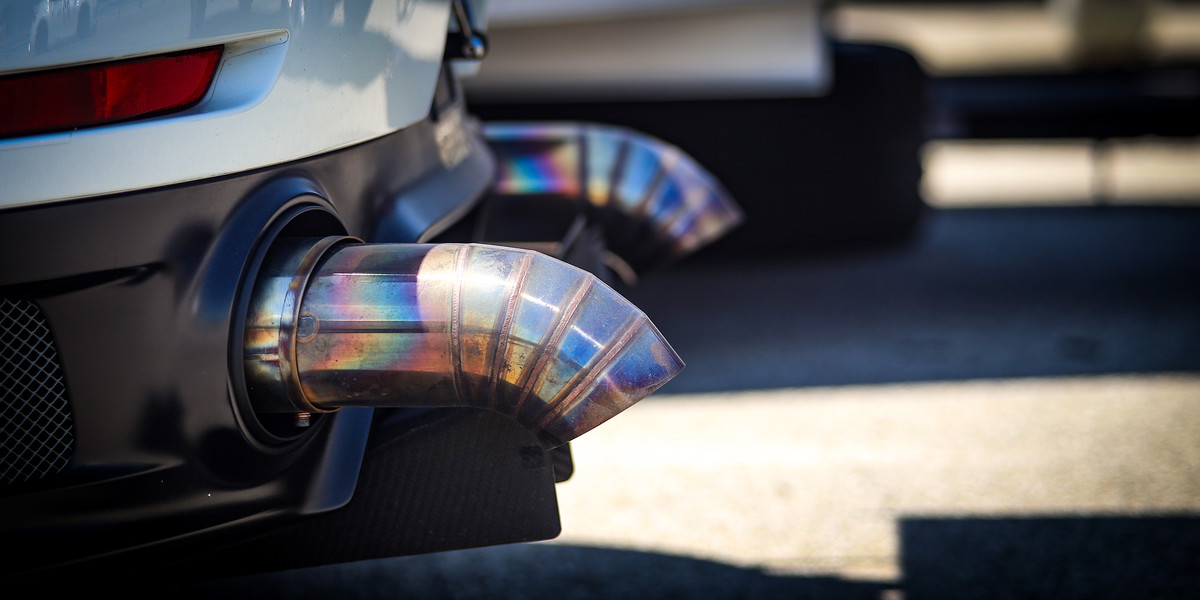
Adding a physical muffler, a "turndown" exhaust tip aimed up or down, or an additional resonator can help. Keep in mind that "packing" in mufflers can wear out over time, so a car that was quiet two seasons ago might need a muffler refresh. Also, don’t forget intake noise when considering a full audio attenuation package.
Photo by Philip Royle