Losing sucks, there’s just no way around it. It totally sucks. I really, really hate to lose. So, for obvious reasons, I try to win. In fact, I work very hard to win as much as possible, because, you know, I hate losing.
Playing with cars over the years, I’ve won more than 160 times. That sounds impressive, but if you were to ask me, “Do you remember when you won the Tire Rack SCCA® Solo® National Tour in Las Vegas?” I would reach into my brain, come up with nothing, and say, “Nope. But, in my defense, it was Vegas, so I probably wouldn’t remember anyway.”
Now, if you were to ask me, “Do you remember when you lost a Solo National Tour in Las Vegas?” Then I could tell you the date, the car I was driving, the weather, what air pressure I had in the rear tires, how the car wouldn’t turn because I had the setup wrong with the front swaybar, and a thousand other details (which all sound like excuses).
Truth is, I remember every single time I’ve lost. I’ve memorized the details. This stuff keeps me up at night.
The thing about losing, though, is it forces you to learn. Unfortunately for me, that means I’ve learned a lot this way. If I’ve won 160 events, then you can only imagine how many I’ve lost. It’s too many for me to want to count. And I remember the pain from each of them.
Allow me to share five things that can be learned from losing.
1. Have the Spare Parts You Need
I road raced Hondas for 10 years, which means I changed a lot of front axles (and, admittedly, head gaskets). I actually got pretty good at the axle swaps – head gaskets were much rougher. But I’ll tell you from experience that when you’re at the racetrack and your axle fails (and it will eventually fail), you can’t replace it if you don’t have a spare.
Yes, swapping a front axle can be done in less than 10 minutes, but only if you possess the new axle to replace it with.
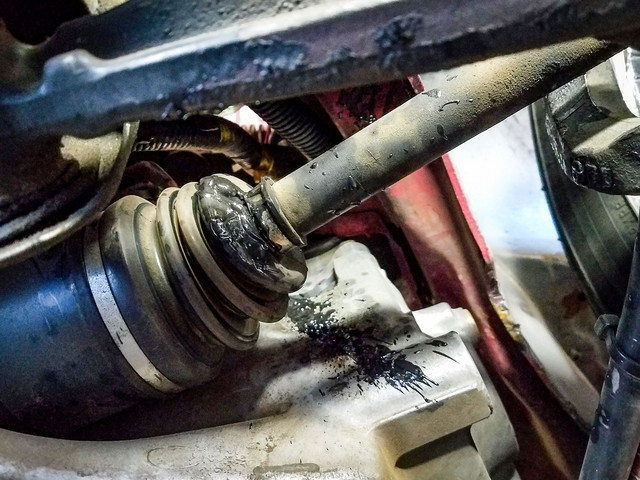
(Constant velocity joints constantly like to break on race cars. The key is to see the early signs of possible mechanical failures and learn from prior mistakes. Photo by Rob Krider.)
Standing in the pits, covered in grease, while yelling on your cellphone at the kid at the local parts store asking if they have a front axle “in stock” for a 1990 Acura Integra is not going to get you on track before the next session.
Guess what? They don’t have one in stock, but they can get you one on Monday, do you want to order it? What you need is to order a time machine and go back and buy that axle a week ago.
Also, you want to inspect your axles and boots to see if a problem is on the way, then replace it with your spare. Have I had an axle fail in the middle of a race when I was leading? Absolutely. Did I win that race? Absolutely not. Did I carry spare Honda axles ever since that day. You bet I did. I learned.
2. Listen To Others Who Know More Than You
When I bought a used 2006 Chevrolet Corvette Z06 (yes, I know, thank you, great choice) people said, “You know, that’s a very tricky car to drive.” All the car magazine writers mentioned how difficult the car was to handle “at the limit.” It seemed like everyone in my orbit was trying to warn me about the car. I could be in the grocery store parking lot just trying to pick up some Cap’n Crunch Berries and a total stranger would say, “Nice car…you know, I heard those are tricky to drive.”
I ignored everyone.
Well folks, it turns out the C6 Z06 is kind of a tricky car to drive. The first time I had it on Buttonwillow Raceway I was backwards in the dirt. I remember sitting there off track, totally surprised, waiting for the dust to clear, thinking of the kid from the film A Christmas Story: “Oh no! I just shot my eye out!”
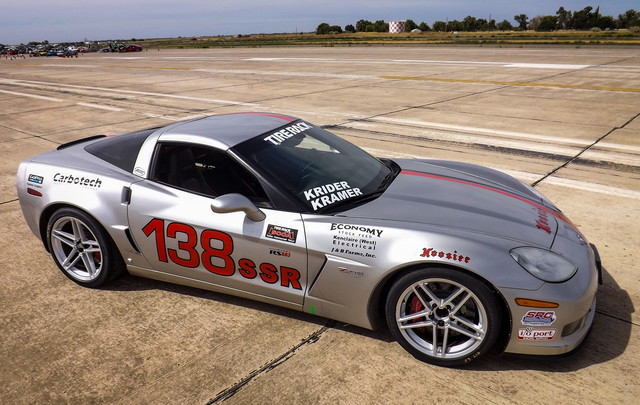
(I went from front-wheel-drive right into a 505 hp C6 Z06. Many people tried to warn me about the car, but I refused to listen to anyone. Photo by Rob Krider.)
Full disclosure, not only did I not listen to anyone, but I also put my own “racing alignment” onto the car and added some toe-out to the rear. Toe-out on the rear of a front-wheel-drive car makes the car turn in nice – toe-out on the rear of a Corvette makes the car instantly fly into the desert.
Did I win the event at Buttonwillow? No. I lost control and then lost the event. Did I start talking to people who compete in Corvettes about their alignment settings. For sure!
3. You Need to See Where You’re Going
The plan was very simple: Take the same team of drivers who won a 24-hour race at one track to try to win another endurance race at another track. Sounds good right? If we won a previous race, shouldn’t we win the next one? One problem, the first race was a “24 hour” race in name only – it wasn’t actually 24 hours. Instead, it was a 16-hour race run over two days during daylight hours. The next race was a true-to-form, around-the-clock 24-hour event, which meant we would be racing in the dark.
The car came with headlights from the factory, so we didn’t see any reason to add supplemental lighting. How dark could a racetrack actually be at night? Turns out, it’s like being on the dark side of the moon wearing a blindfold. Oh, and I forgot to mention this other little detail: Nobody on our team had ever been to the second track before. No joke. We would each try to learn the track during the race.
Is this a perfectly reasonable time to learn a new track? No. Our drivers who had stints during the day figured out the course eventually. Our drivers who jumped in the car at 2 a.m. and tried to learn the dusty track in the pitch black had zero chance at success.
Did we win the race? No. Did we buy a bunch of lights from a Baja 500 team on Monday? You bet we did! We lost, but we learned. Know the track before you take the green flag in an actual race, and if the race takes place at night, bring a ton of lights.
4. Respect the Weather
Things always seem to get ramped up at the Tire Rack SCCA Solo National Championships. Drivers know what’s at stake. The competition is fierce. The event is big, and when the action starts, it’s put-up-or-shut-up time.
A few years ago, I put a lot of chassis development and tire testing into a Honda Civic for H Street. I had the car handling like it was on rails in my home state of California. I smashed everyone with the car...in California. The weather is always good in California. When I got to Nebraska, things were crisp, cold, and frankly miserable for me – a guy who wears shorts in December in California.
I was scheduled to drive in the first run group, and I could see my breath as I exhaled. It was so cold, I was even wearing a jacket with my shorts.
To make the car do what I wanted, I set the car up with a lot of rebound in the rear shocks and a super stiff rear swaybar so the car would rotate around corners in sunny California. Did I change my setup for chilly Nebraska? Did I change my driving style for a cold surface? Did I even recognize it was cold, other than putting on a jacket? Nope, nope, nope.
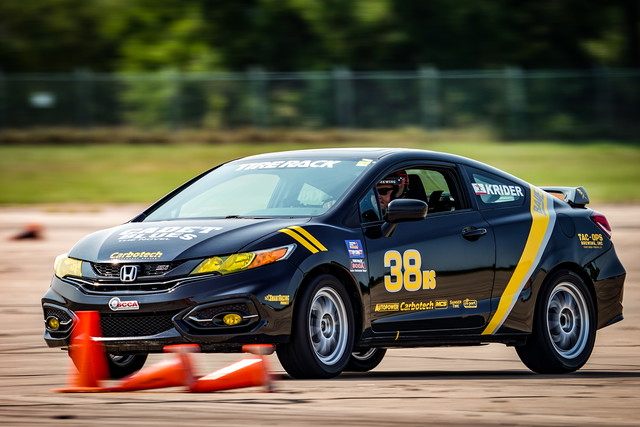
(Going ten-tenths always seems like a good idea as a driver, until the weather doesn’t agree. Photo by Rupert Berrington.)
When the light went green, it was go time at Nationals! I dumped the clutch, buried the throttle, and headed into the first corner, a big, fast, slightly off-camber right hander. The car did exactly what I set it up for, rotation – a lot of rotation. It quickly rotated itself right off the course. This was all so ridiculously predictable that anyone could have seen this coming – anyone except for me.
Did I win Nationals that year? Come on, you know I didn’t. I drove the car sideways through the Lincoln Airpark courses for six runs and left empty handed. I got to stew about my poor decisions as I drove the car all the way home. Did I learn to respect the weather? Yes. Now, ambient temperature and track temps are now part of my run notes.
5. Pay Attention to the People Who Beat You
For this lesson in losing, we’re going way back.
I was at a Tire Rack SCCA Solo National Tour in 2003 in Atwater, CA, running a 2001 Ford Mustang GT Bullitt in F Stock (yup, “Stock” – it was that long ago). I loved this car. It came from the factory with more horsepower, stiffer and lower springs, and a very racy looking round aluminum shift knob. This car was cool, just like Steve McQueen.
It was my first time ever competing at a Solo National Tour, but I wasn’t really worried about the competition because, frankly, I had never been beaten in my Bullitt before. I was like a naïve puppy. Long story short, my butt got kicked at the National Tour. Another Mustang showed up, this one with Arizona plates, and I remember thinking, “Who drove all the way from Arizona for an autocross in California?” The Mustang was a 2001 Cobra, but I wasn’t worried because the Cobra didn’t have the lowered springs like the Bullitt had, or the racy shift knob.
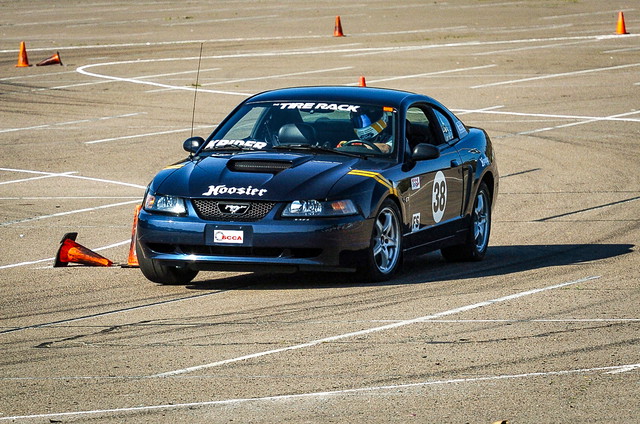
(I thought I was pretty good behind the wheel of this Mustang. That was until I competed against Dave Schotz. Photo by Paul Tibbals.)
I made my first run, it was solid, fast, no cones. I felt great about it. My dad came up to my window and asked, “You think you’ll find two more seconds out there?” I looked at my dad as if he’d lost his mind. “Two more seconds? Old man, I just laid down a flyer, I might find two more hundredths if I’m lucky.” He shook his head and said, “Well, that guy in the Cobra just beat you by two seconds.” Uh oh. I’d been ignoring that Cobra with the Arizona plates all day.
Did I find two seconds and win my first Solo National Tour? Not even close. I got by butt kicked, or maybe I should say stomped, by a guy named Dave Schotz.
Immediately after Dave humbled me at my first Solo National Tour, I walked right over, introduced myself, and started to pick his brain. It turned out that he’d been doing this longer than me and he knew a lot more than I did about car setup. I continued to ask him questions, called him, bugged him, harassed him, and we became pals. We shared a few cars in autocross, where I really learned a lot, then we went road racing together and won a lot of big races and championships. What I learned is that when you lose, go find the person who beat you and learn from them.
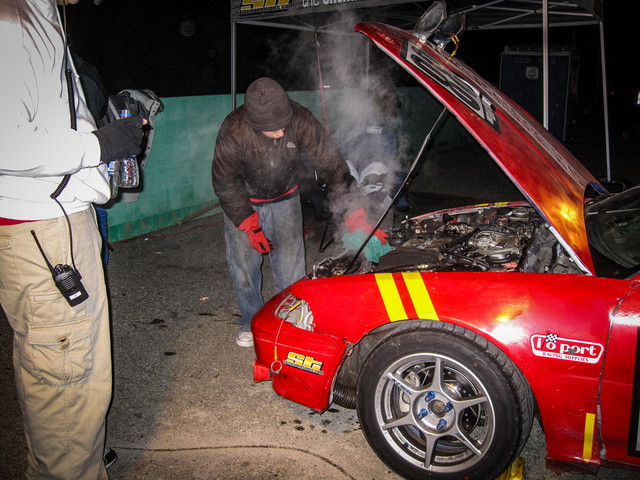
(Losing hurts, but you never forget that feeling. Take in the lesson, make adjustments (either behind the wheel or with your choice of head gaskets on Hondas), then go out and win. Photo by Rob Krider.)
When you read these five tips, your initial thought is probably, “This is basic and obvious. Rob is just dumb.”
True, sometimes I’m pretty dumb, but even though having spares, listening to others, being able to see where you’re going, watching the weather, and looking to the person who just won the event is pretty elementary stuff, these concepts don’t really stick with you until they sting you.
Losing stings, but losing is learning.
(About the author: Rob Krider is a national champion racer, the author of the novel Cadet Blues, and is the host of the Stories and Cocktails podcast.)
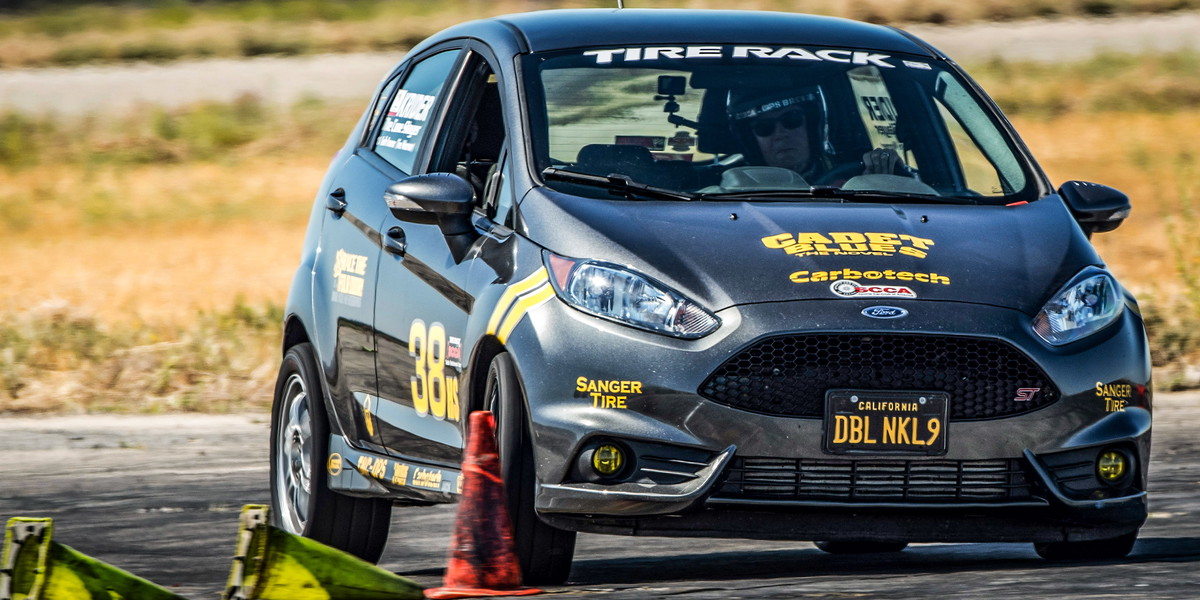
Lead photo by Paul Tibbals