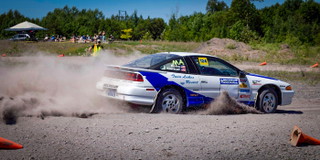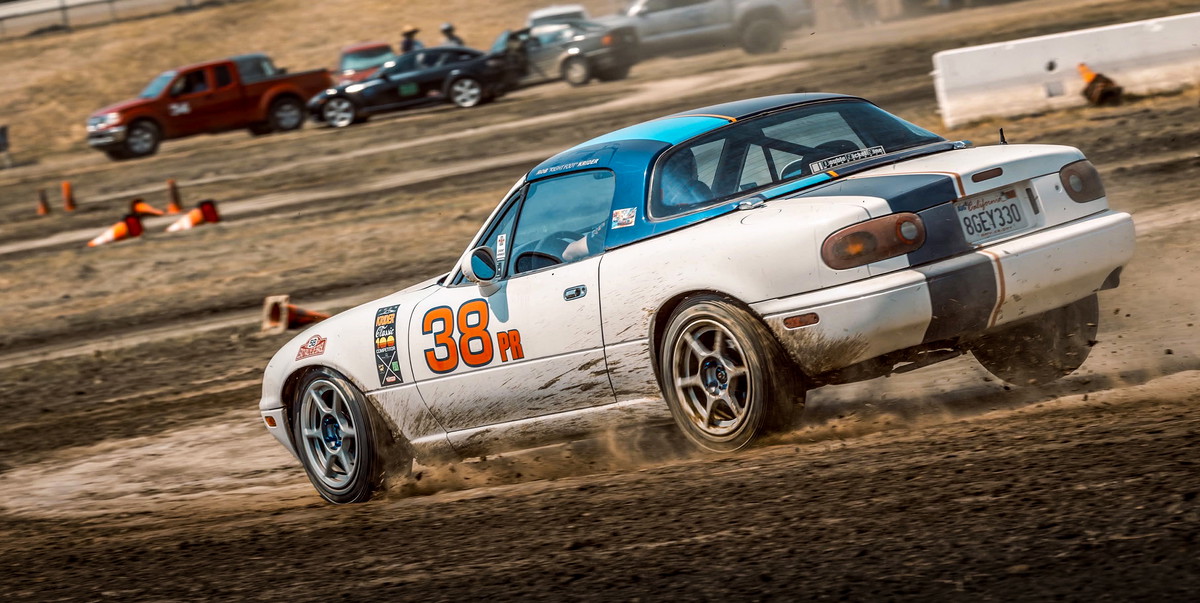
There are a few different ways to attack the dirt while competing in SCCA® RallyCross® – there’s Stock, Prepared, Modified, Constructor, and UTV classes, plus front-wheel-drive, rear-wheel-drive, and all-wheel-drive variations. There are plenty of combinations that have been successful, like a Honda Civic in the Stock Front class or a heavily customized Subaru WRX STI in the Modified AWD class. But the one combination that seems to always do well at the National Championship level is a Mazda Miata in the Prepared Rear class.
Why is this? It could be the irrefutable truth that Miata Is Always The Answer. It could also be the fact that Miatas are absurdly abundant, making them an easy-button choice when searching for a car to thrash. Then there’s the fact that the cars are lightweight and offer great balance right out of the box – plus, the power-to-weight ratio isn’t overpowering, making the car an excellent tool for both beginner and advanced drivers.
Below are five ways to find success in the RallyCross Prepared Rear Wheel Drive class. While this list is all aimed at Miata ownership, some tips can apply to other vehicles. That said, I’ll begin with one that absolutely requires a Miata…
1. Get a Miata
That’s right, buying a Mazda Miata is your first step to winning in SCCA’s RallyCross Prepared Rear class.
Zoom-Zoom isn’t just the answer on tarmac – a Miata truly is the proven answer on dirt, too. Don’t believe me? Check the results for SCCA’s RallyCross National Championship through the years. Which year should you look at? It doesn’t matter – pick a year! You’ll find that with few exceptions (I’m looking at you, Toyota MR2), Miata is in the fight in Prepared Rear, and probably winning outright.
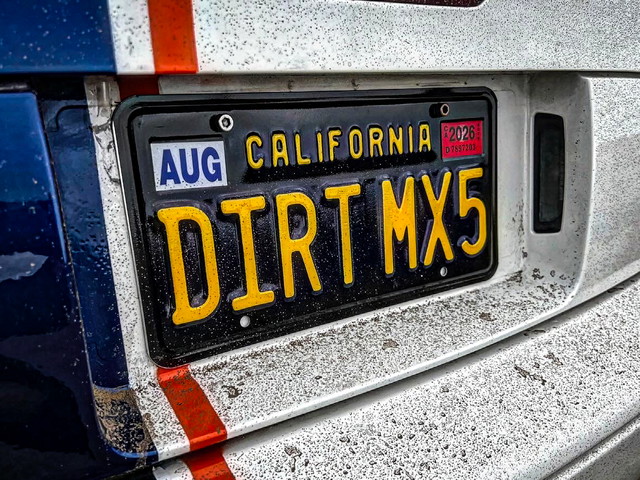
(They say Miata is always the answer. That’s been proven time and time again in autocross and road racing, and it turns out the formula works great for RallyCross as well. Photo by Rob Krider)
Which iteration of Miata-slash-MX-5 should you choose? Again, it doesn’t really matter. The first ever Miata, the NA, built from 1989 to 1997, or the NB, built from 1999 to 2005 (which shares a crazy amount of parts with the NA) will work great and are easy and inexpensive to find. Many of the drivers competing in these cars lean toward the 1.8L model (1994 and up) for its torque, and everyone likes a limited slip differential for traction in the dirt.
The only hard part about competing in RallyCross with a Miata is sourcing a hardtop for the car, which is an SCCA requirement to compete in RallyCross. In many cases, you may spend around $2,000 for a used factory Miata hardtop (NA and NB use the exact same top). Keep your eyes peeled on Facebook Marketplace for a good deal.
2. Bring Lots of Different Tires
Drivers who are really good at RallyCross can somehow read the soil. They’re verified Dirt Whisperers, if you ask me. These folks know when it’s time to switch from a gravel tire to a mud tire, or sometimes even an autocross tire, depending on the surface conditions. They’ll even change tires between runs as the surface changes. That’s exactly what the husband-and-wife team of Shawn Roberts and Katie Orgler did with their Miata at the 2025 RallyCross National Championship. They saw the weather was leaning toward rain and super muddy conditions, so they changed tires and went on to finish first (Shawn) and second (Katie).
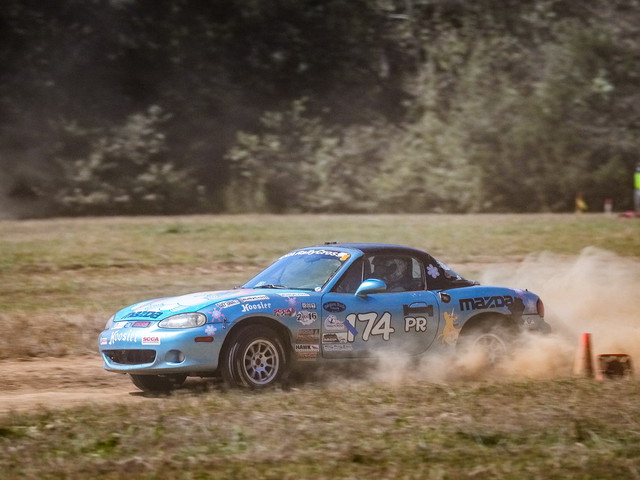
(Shawn Roberts won the 2025 SCCA Rallycross National Championship in HollyTree, AL, by a large margin of 83 seconds. Photo by Dante Donati)
The type of tires to choose certainly vary for the surface. Some drivers like the Alpha Eurocross tire, some like Hoosier gravel rally tires, and others choose the MRF ZDM3. What everyone agrees on, though, is you need to bring tire options to optimize your vehicle for the RallyCross surface.
When things went full mud at the 2025 National Championship, Shawn and Katie slapped some Alpha Boxer super small steer tires (135/70-15) on a set of narrow drag racing front wheels – and Shawn took home the Prepared Rear National Championship title.
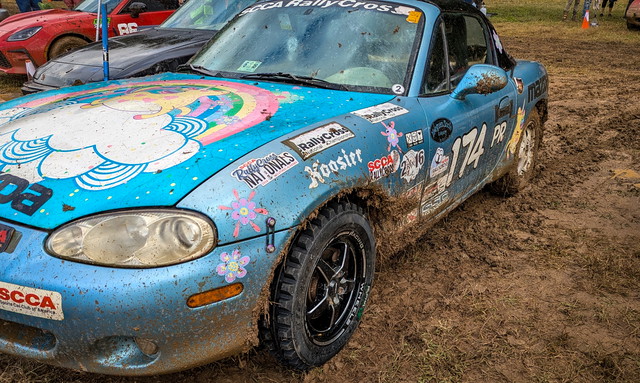
(The NB Miata of Katie Orgler and Shawn Roberts with fresh narrow steer tires on the front, ready to attack muddy conditions. Photo by Katie Orgler)
3. Coilover Suspension
To improve the Miata along bumpy RallyCross courses, many drivers choose to switch out the stock spring-on-shock suspension to an adjustable coilover setup. Coilover suspension allows drivers to easily change the ride height to either lower the vehicle for a low center mass, or raise the ride height for more suspension travel (and ground clearance). Coilover suspension also makes for easier spring changes to find the perfect spring rates for optimal handling in off-road conditions.
Nile Davis has been to the SCCA RallyCross National Championship six times in a Miata and has trophied four times, finishing second twice. Niles shares a Miata with his pal Josh Mefford, and their Miata has an inexpensive 5X Racing Create-Your-Own DIY Coilover Kit where they were able to choose their spring rates and suspension travel.
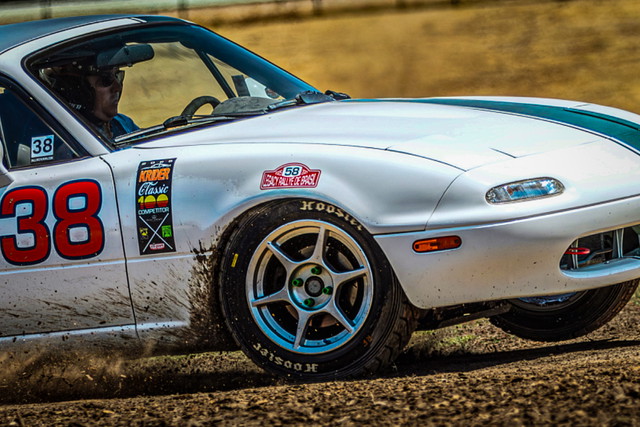
(An adjustable coil-over suspension will allow you to adjust ride height and spring rates for different RallyCross course conditions. Photo by Toua Hawj)
When it comes to the exact spring rate to choose to be quick in RallyCross, that comes with a lot of differing opinions. However, most drivers agree that on dirt, the softer the better, somewhere in the 200-300 lb-in range.
Pro Tip: When installing coilovers in NA and NB Miatas, you might as well replace the stock bushings in these now-vintage cars with something stiffer and tougher. A stiffer bushing allows the alignment to stay closer to a static setting while traversing bumpy conditions.
4. Skid Plate
It’s always hard to ask race car drivers to add weight to their cars if it’s not required and doesn’t improve performance. A skid plate is nothing more than a large piece of steel that bolts to the bottom of a car to protect the oil pan. Yes, it adds weight, but I’ll argue that it does improve performance. How well does a car perform when it has zero oil pressure? Not too good! A skid plate keeps those hidden pesky rocks on RallyCross courses from punching an ugly engine-ruining hole through a thin oil pan. Think of it as a seatbelt for your oil pressure.
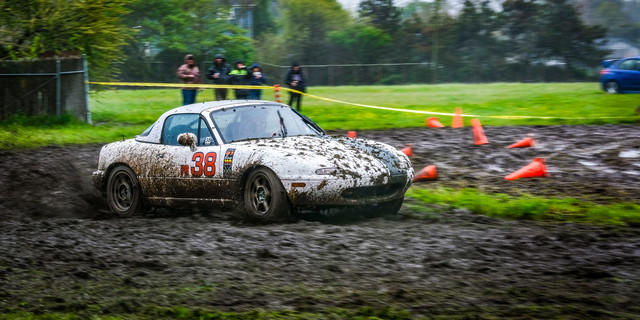
(A skid plate is the simple safety device that lets you keep the oil in your oil pan. Hiding in the mud of this course could be large oil pan piercing rocks that can ruin your engine and your day. Photo by Toua Hawj)
5. Add Lightness
Colin Chapman, of Lotus fame, is known for his endless design of the lightest weight car for racing, and his catch phrase of, “Simplify, then add lightness,” certainly works for Miatas. MX-5s out of the box are simple and light. The Prepared Rear ruleset allows for certain modifications that can help make a Miata (which is already very light) even lighter.
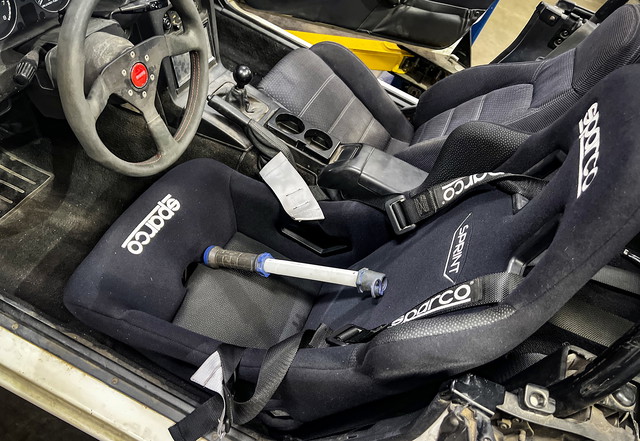
(The Prepared Rear RallyCross rules allow for seats to be replaced with a lighter version. Swap out your heavy stock seat for a lightweight and better driver cuddling racing seat. Photo by Rob Krider)
Shawn Roberts swapped out his driver seat for a racing seat and added a Sparco steering wheel. You can do the same, and also change the battery, remove the convertible soft top within the confines of the rules, or maybe use lightweight wheels. Or why not all of the above?
RallyCross is no different than any other kind of racing: The lighter the car, the quicker it can accelerate, brake, and navigate curves. So, grab a wrench and add some lightness.
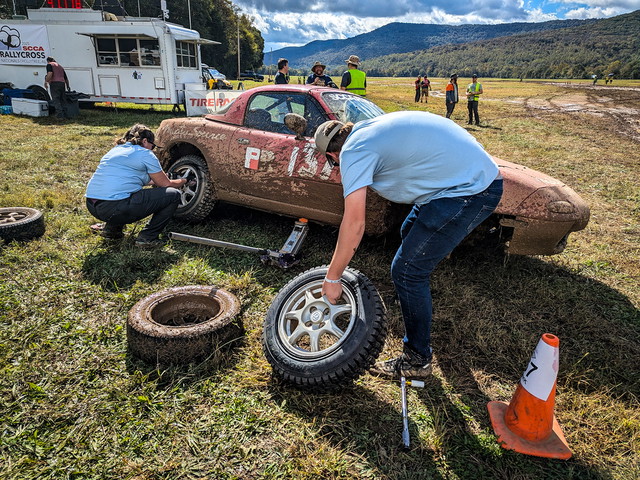
(Buy a used Miata, get some RallyCross tires, bolt on a coilover suspension, add a skid plate, and then make it as light as legally possible in the Prepared Rear class. You’re on your way to RallyCross success! Photo by Katie Orgler)
Those five suggestions seem to be the winning combination of vehicle and parts to be successful in the Prepared Rear class of RallyCross – especially in a Miata. Why a Miata? I know you’ve heard it before (as a matter of fact, in this very article): Miata Is Always The Answer.
(About the author: Rob Krider is a national champion racer, the author of the novel Cadet Blues, and is the host of the Stories and Cocktails podcast.)
Main photo by Toua Hawj